
Are Heat Pumps Worth It in Nova Scotia’s Climate?
Nova Scotia homeowners are asking a very practical question: Are heat pumps actually worth it in our winters?
With rising oil prices, improved cold-climate technology, and expanding rebate programs, heat pumps have become one of the fastest-growing heating upgrades across the province. But performance in Atlantic winters, long-term savings, and installation quality all matter.
Here’s what Nova Scotia homeowners should know before making the switch.
How Heat Pumps Work (And Why They’re Different From Oil)
Unlike oil furnaces or electric baseboards that generate heat through combustion or resistance, heat pumps transfer heat from outdoor air into your home using a refrigerant cycle.
Even in cold temperatures, outdoor air contains usable heat energy. Modern cold-climate systems are designed to extract that energy efficiently and deliver steady indoor comfort.
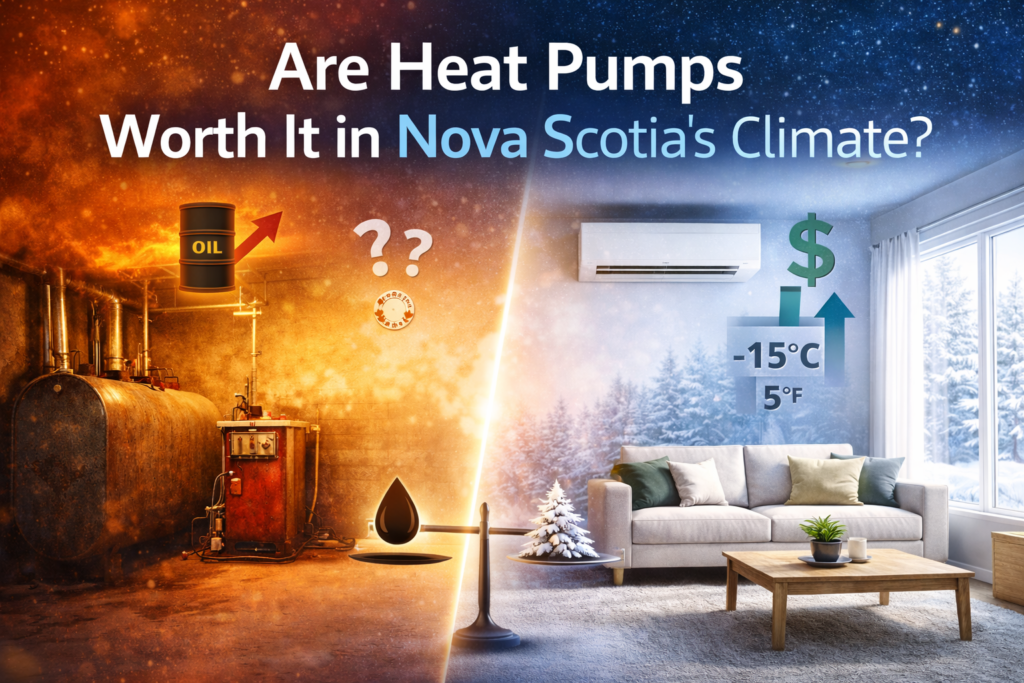
In Nova Scotia, where average winter temperatures often range between -5°C and -15°C (with occasional colder stretches), this technology performs far better than older models did a decade ago.
If you’re new to the technology, see our full guide on Heat Pumps in Nova Scotia for a detailed breakdown of system types and performance.
Cold Climate Performance in Nova Scotia Winters
A common myth is that heat pumps “don’t work in real winter.”
That was partially true for older systems.
Modern cold-climate heat pumps:
• Maintain strong output at -15°C
• Continue operating efficiently below -20°C
• Automatically adjust output using inverter-driven compressors
• Provide steady, even heat rather than bursts of hot air
The key factor isn’t just the equipment — it’s proper sizing and installation.
When installed correctly, most Nova Scotia homes can rely primarily on a heat pump for heating, sometimes with minimal backup support during extreme cold snaps.
Oil Heating vs Heat Pumps: What Nova Scotia Homeowners Are Comparing
Oil heating systems:
• Depend on fluctuating global fuel prices
• Require fuel deliveries and tank storage
• Produce higher carbon emissions
• Require regular servicing and burner maintenance
Heat pumps:
• Use electricity rather than combustion
• Provide both heating and cooling
• Lower long-term operating costs in many homes
• Reduce reliance on fossil fuels
While oil systems often have lower upfront installation costs, operational expenses can be unpredictable. In contrast, electricity pricing in Nova Scotia has been more stable than global oil markets.
Over time, many homeowners report noticeable monthly savings — especially when replacing older oil systems.
Installation Costs & Rebates in Nova Scotia
Upfront cost is often the biggest concern.
Typical residential installation ranges vary depending on:
• System size
• Ducted vs ductless configuration
• Electrical upgrades
• Home layout
However, Nova Scotia offers provincial and federal rebate programs that can significantly reduce upfront investment.
See our full breakdown of Nova Scotia Heat Pump Rebates to understand eligibility and stacking opportunities.
For many households, rebates combined with long-term energy savings improve the overall return on investment.
Long-Term Savings & Home Value
Beyond monthly utility savings, heat pumps offer additional long-term benefits:
• Improved year-round comfort (heating + cooling)
• Reduced exposure to oil price volatility
• Increased appeal to energy-conscious homebuyers
• Lower overall carbon footprint
In competitive housing markets, energy-efficient upgrades increasingly influence buyer decisions. A professionally installed heat pump system can enhance perceived home value.
Most systems last 12–20 years with proper maintenance, making them a durable long-term investment.
The Real Answer: Are They Worth It?
For many Nova Scotia homeowners, yes — especially when replacing aging oil systems.
Heat pumps make the most sense when:
• The system is properly sized
• Installation is done by qualified professionals
• The home has reasonable insulation
• Rebates are applied strategically
Performance, savings, and reliability depend heavily on correct installation. Working with experienced local contractors familiar with Nova Scotia’s climate and energy programs is essential. Several established providers operate across the province, including companies such as Quinn Energy, which install systems tailored for local conditions.
Frequently Asked Questions
Do heat pumps work during extreme cold in Nova Scotia?
Modern cold-climate models are designed to operate efficiently in temperatures commonly experienced throughout the province.
Can a heat pump fully replace oil heating?
In many homes, yes. Some homeowners choose hybrid setups depending on insulation and home layout.
How much can I save compared to oil?
Savings vary by home size and energy usage, but many homeowners see noticeable reductions in monthly heating costs.
Are rebates available?
Yes. Provincial and federal programs may significantly reduce upfront costs. See our rebate guide for details.
Final Thoughts
Heat pumps are not a “trend” in Nova Scotia — they are becoming a practical heating standard.
With improving technology, expanding incentives, and increasing energy awareness, they offer a balanced combination of efficiency, comfort, and long-term savings for many households across the province.